Periodontitis: what happens to your gums and when to seek help
Periodontitis affects the structures supporting your teeth and may progress without severe pain. Learn how it differs from gingivitis, what a dentist checks and why ongoing care matters.
Key takeaways
- Periodontitis affects the tissues and bone supporting your teeth.
- A lack of pain does not rule out gum disease.
- Treatment depends on examination and measurements, not a photo alone.
- Maintenance care continues after inflammation is brought under control.
Bleeding gums do not necessarily mean periodontitis. Equally, a lack of pain does not prove that the support around your teeth is healthy. An examination is the most useful first step: it helps establish what is happening without guesswork.
How does periodontitis differ from gingivitis?
Gingivitis is inflammation of the gums. It can usually be brought under control with appropriate professional care and daily cleaning. Periodontitis also affects the tissues and bone supporting the teeth. Deeper pockets can develop between the teeth and gums. This is more than simply having extra tartar, and changing toothpaste alone will not treat it.
Which changes deserve attention?
Repeated bleeding, swelling, receding gums, persistent bad breath or a change in your bite warrant assessment. Teeth may become loose as the disease progresses. Symptoms can be mild, so you do not need to wait for pain before seeking advice.
Smoking and diabetes increase risk. Tell your dentist about your medical conditions and medicines so these can be considered in planning care. Do not change prescribed medication yourself.
What does the examination involve?
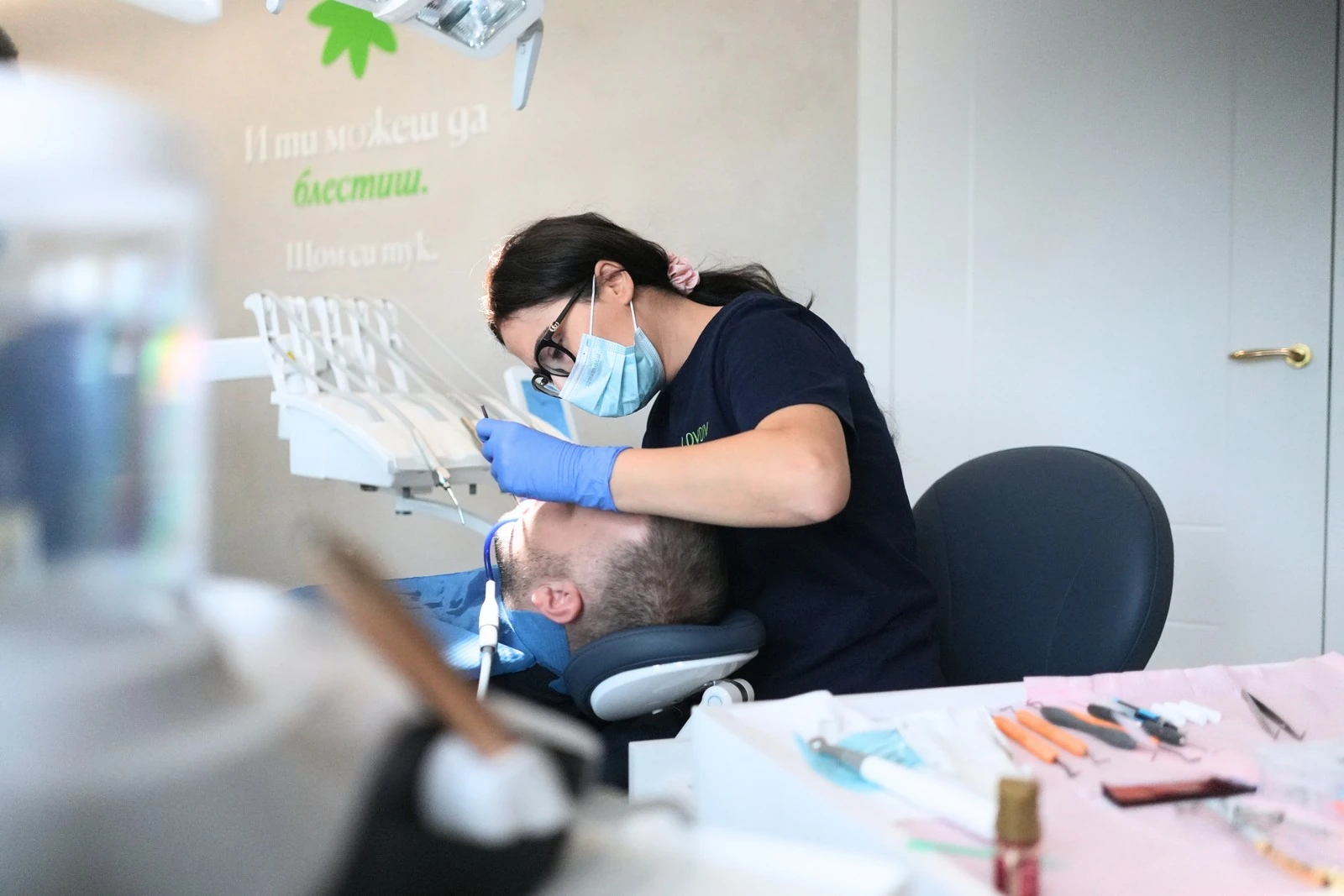
Your dentist checks the gums, measures the pockets with a thin probe, and assesses bleeding and tooth mobility. X-rays may be needed to evaluate the supporting bone. These checks establish both the inflammation and the support affected. A photograph or description in a chat cannot replace the examination.
What can treatment include?
Initial care combines suitable home cleaning, management of risk factors and professional removal of deposits. Where needed, cleaning also reaches below the gums along the root surfaces. Several appointments and local anaesthetic may be appropriate.
The gums are reassessed after initial treatment. If deep pockets remain, further treatment, including surgery or specialist referral, may be discussed. Antibiotics are not an automatic first step. The aim is to control inflammation and limit further damage; it is not a promise that lost bone will always grow back.
Earliest available appointment
Checking the schedule…
Why does care continue afterwards?
Maintenance appointments remain part of treatment even when your gums feel better. Their frequency depends on your individual needs. At home, brush twice daily with fluoride toothpaste and clean between your teeth every day using a suitable tool. Ask for a demonstration: a small adjustment can make the routine easier.
When should you seek help promptly?
Very painful, swollen gums or a newly loose tooth need prompt dental assessment. Significant swelling with difficulty breathing or swallowing needs immediate medical help. For other recurring symptoms, arrange an examination rather than waiting for pain to decide for you.
Frequently asked questions
Does any bleeding mean periodontitis?
No. Bleeding has several causes. An examination distinguishes gingivitis from damage to the supporting tissues.
Can mouthwash treat it on its own?
Mouthwash does not remove tartar or replace professional treatment. Use it as advised by your dentist.
Will I definitely need surgery?
No. Initial measures come first; further treatment depends on the findings at reassessment.
Is treatment finished when the bleeding stops?
Not necessarily. Pocket condition and maintenance needs are assessed at follow-up appointments.